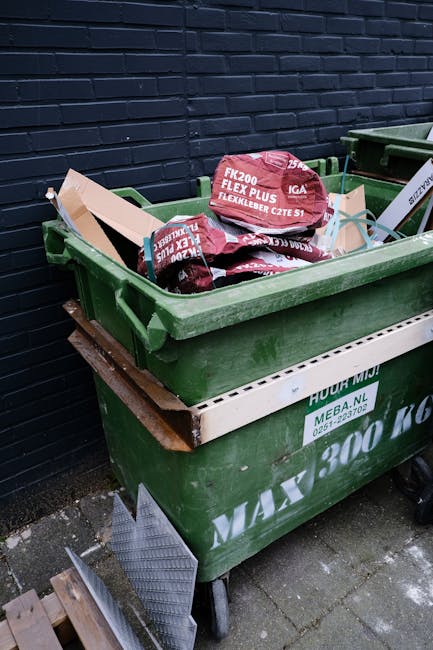
Eco-Friendly Disposal in Becontree: Recycle Old Furniture Right

If you've got a sofa taking up half the hallway, a dining table with one wobbly leg, or a wardrobe that's been patched together one move too many, you're not alone. Old furniture has a way of lingering. And in a place like Becontree, where homes, flats, and shared spaces all run on tight schedules and tighter storage, getting rid of bulky items can feel like a proper faff.
The good news is that Eco-Friendly Disposal in Becontree: Recycle Old Furniture Right is usually much simpler than people expect. The trick is to sort items properly, choose the right route for reuse or recycling, and avoid the "just dump it and hope" approach that ends up costing more in waste, time, and stress. This guide walks you through the practical side of doing it well, with a local mindset and no fluff.
Whether you're clearing a house before a move, replacing office furniture, or just trying to reclaim a room that has become a storage zone, you'll find clear steps, sensible checks, and a few expert nudges along the way. Let's make the whole thing feel manageable.
Why Eco-Friendly Disposal in Becontree: Recycle Old Furniture Right Matters
Furniture disposal sounds simple until you actually have to do it. Then the questions start. Is it repairable? Does anyone still want it? Can the frame be recycled, or is it mixed material? Do you need to carry it down three flights of stairs, or can it be collected safely? That's before you even think about landfill.
Eco-friendly disposal matters because furniture is often made from a mix of wood, metal, foam, fabric, adhesives, and fasteners. Some of that can be reused, some can be separated and recycled, and some unfortunately cannot. The better you sort it at the start, the more likely it is that usable parts stay in circulation instead of becoming avoidable waste.
There's also the local reality. Becontree has plenty of busy households, landlords, offices, and moving-day clear-outs. When bulky waste is left in communal areas, side passages, or on pavements, it becomes a nuisance quickly. It can block access, attract fly-tipping, and create avoidable safety issues. To be fair, nobody wants to step around a broken bed frame on the way to work.
For many people, the decision is not really about whether to remove the furniture. It's about how to remove it responsibly. That difference matters.
Key takeaway: the greenest option is usually the one that keeps the item in use for as long as possible, then recycles what remains, and only disposes of the unusable parts as a last resort.
How Eco-Friendly Disposal in Becontree: Recycle Old Furniture Right Works
The process usually follows a sensible order: inspect, separate, decide, move, and route each item to the right destination. That might sound slightly formal, but in practice it's just a structured way of avoiding waste.
1. Start with a condition check
Ask three basic questions: Is the item still structurally sound? Could someone else use it? Is it clean enough to pass on without causing problems? A scratched table may still be useful. A sofa with torn upholstery, broken springs, or deep staining may not be suitable for reuse, but parts of it could still be recovered.
2. Separate items by material or function
If you have more than one piece, sort them into simple groups: solid wood, metal frames, upholstered pieces, flat-pack items, mattresses, and mixed-material furniture. You do not need to become a recycling engineer. Just notice what the item is made of and whether anything can be detached safely.
3. Decide the best route
There are usually four routes: reuse, donate, repair, recycle, or dispose responsibly if nothing else is suitable. Reuse comes first if the furniture still has life in it. Recycling comes next when the item has value as materials. Disposal should be the final option, not the first one.
4. Plan the removal safely
Furniture is awkward, heavy, and sometimes sharp at the edges. It's one thing to move a coffee table; it's another to shift a wardrobe down a narrow stairwell on your own. If you're handling bulky items, plan the route out of the property before you start lifting. Doors, banisters, mirrors, and corners all deserve attention. You know the drill.
5. Use the right collection or removal method
Some furniture can be taken as part of a broader household move or clearance. If you are already arranging a home move, a wider removal service can make the whole process easier. For smaller loads, a flexible option such as man and van support or a dedicated furniture pick up can be the practical choice. The key is matching the service to the amount of furniture you actually have.
When the route is clear, the entire job gets easier. Oddly enough, that is often the bit people skip.
Key Benefits and Practical Advantages
People usually think about eco-friendly disposal in environmental terms first, which is fair enough. But there are several very practical benefits too.
Less waste going to landfill
Good furniture recycling reduces the volume of material sent for final disposal. That is especially relevant for bulky items, which take up a lot of space compared with their actual usable parts.
Better use of existing materials
Wood, steel, aluminium, and some plastics can often be recovered if the item is handled properly. Even when the whole piece cannot be reused, parts of it may still be valuable. That matters. A frame may still be strong even if the upholstery is tired.
Cleaner, safer spaces
Removing old furniture promptly clears access routes, opens up rooms, and helps you avoid trip hazards. If you're preparing a tenancy handover, a property sale, or an office relocation, that tidy-up effect is not small. It changes how a space feels straight away.
Less stress during a move
Old furniture tends to become a decision you keep putting off. Do I keep it? Sell it? Fix it? Move it? Removing that mental clutter can be a relief in itself. We've seen people breathe easier just by getting one bulky item out of a spare room.
Potential cost efficiency
Sorting items in advance can reduce handling time and make collection more efficient. If you are requesting a quote, clear photos and a simple list of what needs removing help the provider judge the job accurately. That usually saves back-and-forth. And nobody enjoys that.
Positive local impact
When residents and businesses in Becontree dispose of furniture responsibly, the benefit is shared. Less fly-tipping risk, fewer abandoned bulky items, and a better chance that useful goods stay in circulation. It is a small thing on its own, but it adds up.
Who This Is For and When It Makes Sense
Eco-friendly furniture disposal is useful in more situations than people realise. It is not just for major renovations or end-of-tenancy clear-outs.
- Homeowners replacing old sofas, beds, wardrobes, or tables
- Tenants needing to clear bulky items before moving out
- Landlords and letting agents preparing a property for re-let
- Businesses replacing desks, chairs, filing cabinets, or meeting tables
- Families clearing inherited furniture after a house change
- People downsizing and wanting to keep only what truly fits the next space
It also makes sense if you live in a flat or shared property and simply cannot store the item while you decide what to do. A lot of people in Becontree are working with limited space, so the "I'll sort it later" approach tends to become "it's still here six months later." Truth be told, that happens all the time.
If the item is large, awkward, or damaged, and if you need it gone quickly, using a structured removal approach is usually more sensible than trying to improvise. A wider removal service can handle the lifting, sorting, and transport side more comfortably than a DIY trip in a small car.
Step-by-Step Guidance
Here is the most practical way to do it without overcomplicating the job.
- List every item. Write down what you are getting rid of. It sounds basic, but it helps you spot which pieces are reusable, recyclable, or simply too far gone.
- Check for reuse potential. If the furniture is clean, safe, and structurally sound, it may be suitable for resale, donation, or repurposing.
- Remove loose accessories. Take off cushions, drawers, shelves, detachable legs, and anything else that can be separated safely.
- Take photos. Good photos help when requesting a quote or deciding whether an item is worth repairing. One clear image in daylight is often enough.
- Measure doorways and stairs. Not glamorous, but essential. A sofa that fits in your lounge may still be a nightmare to remove.
- Choose the best removal route. For small loads, a moving van may be enough. For larger, mixed, or heavier items, a bigger vehicle or a full removal van may be more suitable.
- Book the collection. Try to arrange a time when access is easiest. Morning collections can be calmer, especially if you're in a busy street or shared block.
- Prepare the path. Clear rugs, toys, cables, and anything else that could catch a foot or snag a wheel.
- Decide what stays and what goes. Mark items clearly if you are clearing several rooms at once. It saves confusion on the day.
- Hand over the item responsibly. Make sure the provider understands what is being collected and where it should go next. Reuse, recycling, or disposal should be clear from the start.
If you are clearing a whole property, this may also be a good moment to think about house removals or even broader home moves support, especially when furniture is only one part of a bigger transition.
Expert Tips for Better Results
A few small choices make a big difference here.
1. Keep reusable pieces separate from damaged ones
If one chair is cracked and the others are fine, do not mix them together and assume the lot is scrap. Sorting well protects value. It also makes the recycling path cleaner.
2. Think about dismantling before collection
Some items are easier and safer to move in sections. Flat-pack wardrobes, bed frames, and shelving units often travel better when partly dismantled. Just keep the screws and fittings in a labelled bag. We've all lost a tiny bag of fixings and then stared at a half-built shelf later on. Not ideal.
3. Use the quietest access route available
If your property has back access, lift access, or a less crowded entrance, use it. That makes removal safer and helps avoid awkward contact with walls, doors, and neighbours. No one wants a chipped skirting board on the day.
4. Be honest about condition
If a sofa is water-damaged, mouldy, or heavily worn, say so. A clear description is better than a polite guess. It helps the receiver plan the right route for the item and avoids disappointment later.
5. Plan for the whole room, not just the furniture
When one bulky item leaves, it often reveals another problem: old packaging, forgotten cables, broken lamps, or clutter that has been sitting behind the wardrobe for years. Small opportunity, that. It can be worth clearing the wider area while you have the chance.
If you want the furniture moving side handled with care, look for a provider that treats man with van work as a managed service, not just a quick lift-and-go. Good handling matters just as much as speed.
Common Mistakes to Avoid
Most problems with furniture disposal come from rushing the job or assuming everything can be treated the same way.
- Leaving sorting until collection day. You lose time, and the wrong items may end up in the wrong stream.
- Putting damaged items in with reusable ones. That can contaminate the lot and make recycling less effective.
- Ignoring safe lifting. Furniture looks harmless until it catches awkwardly on a stair turn.
- Forgetting access restrictions. Narrow stairwells, parking limitations, and shared entrances all matter.
- Assuming all wood is recyclable in the same way. Painted, treated, laminated, and mixed wood products may need different handling.
- Not checking upholstery condition. A sofa that looks fine from across the room may not be suitable for reuse at all.
- Choosing the smallest vehicle by default. Sometimes that leads to extra trips, which is hardly eco-friendly.
One of the biggest mistakes is simply doing nothing for too long. Furniture does not become easier to remove by waiting. If anything, it gets more annoying.
Tools, Resources and Recommendations
You do not need specialist gear for every job, but a few practical tools help enormously.
- Measuring tape for doorways, stairs, and item dimensions
- Protective gloves for splinters, sharp edges, and rough surfaces
- Furniture blankets or wraps to protect floors and walls
- Labels or marker tape to mark reusable, recycle-only, or dispose items
- Screwdriver or Allen key set for flat-pack dismantling
- Phone camera for clear photos before collection
In terms of service options, a smaller domestic job may suit a flexible collection using man and van removals, while a larger household or business clearance may work better with removal company support. If you are unsure which route is sensible, a quote request with accurate photos is the cleanest next step.
For readers who want to understand the company's wider approach to responsible handling, recycling and sustainability information is also worth reviewing. It gives a better sense of the standards behind the service.
Law, Compliance, Standards, or Best Practice
Furniture disposal in the UK sits within broader waste and environmental expectations, and while the exact rules can vary depending on the item and the local route used, the safest principle is simple: do not leave bulky waste to chance.
From a best-practice point of view, the main responsibilities are straightforward: ensure items are handled safely, avoid fly-tipping, do not place reusable goods into the wrong disposal stream, and use a provider that understands responsible waste handling. For businesses, that usually means keeping better records and taking a more careful line on data-containing items, office furniture, and anything that may still be usable elsewhere.
If furniture includes sharp metal parts, broken glass, contaminated upholstery, or mould, extra caution is sensible. The item might still be removable, but it should be treated as a handling and hygiene issue rather than a simple lift-and-load job. That is especially true in shared properties or commercial spaces.
It is also worth checking the provider's health and safety policy and insurance and safety information before booking. That is not being fussy. It's just smart. Furniture is heavy, awkward, and occasionally a bit of a menace.
For larger business clear-outs, office furniture disposal should align with a structured office move or clear-down process. If that applies to you, services such as office removals and office relocation services can support a more organised transition.
Options, Methods, or Comparison Table
Different furniture disposal methods suit different situations. Here's a simple comparison to help you decide.
| Option | Best for | Strengths | Limitations |
|---|---|---|---|
| Reuse or donate | Good-condition furniture | Keeps items in circulation, lowest waste | Not suitable for damaged, dirty, or unsafe pieces |
| Repair and resell | Solid items with minor wear | Can recover value and extend lifespan | Requires time, effort, or repair skill |
| Furniture recycling | Items with recyclable components | Reduces landfill and recovers materials | Mixed materials can be harder to process |
| Bulky item removal service | Large, awkward, or multiple items | Convenient, safer, less physical strain | Needs clear planning and accurate job details |
| DIY disposal trip | Small, manageable loads | Can be workable for a single item | Time-consuming, risky, and not always the greenest if it means multiple journeys |
For a single small chair, DIY may be fine. For three wardrobes, a bed frame, and a sofa? Honestly, you will usually be happier with proper removal support.
Case Study or Real-World Example
A typical Becontree scenario might look like this. A couple are moving out of a two-bedroom flat. They have a sofa that is still sturdy, a bed base that is fine but out of style, and a dining chair set with one broken seat. The room is already full of boxes, and the lift is booked for the morning.
They start by sorting the furniture into three piles. The sofa is clean and structurally sound, so it is flagged as reusable. The bed base is dismantled carefully, because it will move more safely in pieces. The damaged dining chairs are checked for recyclable parts and separated from cushions and loose fittings.
Instead of trying to wedge everything into a small car in two trips, they arrange a planned collection using man with van removal. That keeps the move simple, avoids damage to the hallway, and means the items are handled in one go. The usable sofa can be directed to a new home, the bed frame materials can be dealt with properly, and the broken chairs do not end up abandoned outside the block. Clean finish, less hassle.
It is a small example, but it shows the value of planning. The difference between a stressful day and a calm one is often just a few well-timed decisions.
Practical Checklist
Use this before collection or disposal day.
- Have I listed every item that needs to go?
- Have I checked whether any item could be reused, donated, or repaired?
- Are the items clean enough and safe enough for the chosen route?
- Have I separated detachable parts such as legs, shelves, cushions, and fittings?
- Have I measured doorways, stairs, and any tight turns?
- Is the access route clear of rugs, cables, boxes, and other obstacles?
- Have I taken photos for reference or quoting?
- Do I know whether I need a small collection or a larger removal service?
- Have I confirmed the pickup time and parking/access details?
- Have I checked the company's safety and insurance information?
If you can tick most of those off, you are in a strong position. Not perfect, maybe. But properly prepared, which is what counts.
Conclusion
Eco-friendly furniture disposal in Becontree is really about making better choices, one item at a time. Reuse what still has life in it. Recycle what can be recovered. Remove what is left in a safe, organised, and sensible way. That approach reduces waste, protects your space, and makes the whole job feel far less chaotic.
Whether you are clearing one bulky item or managing a full property reset, the most effective plan is usually the simplest: sort carefully, lift safely, and choose a removal route that matches the furniture in front of you. The payoff is not just environmental. It is practical peace of mind. And that matters more than people think.
Get the item out properly, and you free up the room, the schedule, and a little bit of headspace too. Small win. Big relief.
Get a free quote today and see how much you can save.
Frequently Asked Questions
What is the best way to recycle old furniture in Becontree?
The best approach is to check whether the item can be reused first, then recycle the parts that can be separated, and only dispose of the remainder as a last resort. If the furniture is large or awkward, a planned pickup is usually the safest option.
Can I put old furniture out on the pavement for collection?
Not without checking the proper collection route first. Leaving bulky items outside can create obstructions and can be treated as fly-tipping in some situations. It is better to arrange a responsible collection or approved disposal method.
How do I know if furniture is suitable for reuse?
Look for structural soundness, cleanliness, and overall safety. If it is still sturdy, free from major damage, and usable without repair, it may be suitable for reuse or donation. Upholstered items need extra care because stains, odours, and wear can change the picture quickly.
Is it cheaper to recycle furniture or hire a removal service?
That depends on the amount, size, and condition of the items. A single chair may be easy to handle yourself. A sofa, bed frame, and wardrobe usually becomes more efficient with a removal service because it saves time, effort, and extra trips.
What furniture items are hardest to dispose of responsibly?
Large sofas, bed frames, wardrobes, mattresses, and mixed-material items tend to be the trickiest. They are bulky, often heavy, and may need dismantling before they can be moved safely or processed properly.
Can broken furniture still be recycled?
Sometimes, yes. It depends on the material mix and condition. A broken item may still contain recyclable components such as metal or wood, but contaminated or heavily damaged pieces may have limited recovery value.
Do I need to dismantle furniture before collection?
Not always, but it often helps. Dismantling can make transport safer and easier, especially for wardrobes, beds, and shelving units. If you do dismantle items, keep the fittings together so nothing goes missing.
What should I ask before booking a furniture pickup?
Ask how the item will be handled, whether the provider can manage bulky loads safely, and what happens to reusable or recyclable furniture. It is also sensible to ask about access, timing, and any safety or insurance details.
Is furniture disposal different for homes and offices?
Yes, a bit. Home disposal usually involves personal furniture and fewer items, while office disposal often includes desks, chairs, cabinets, and a need for better organisation. Commercial clear-outs may also need a more structured removal plan.
How far in advance should I arrange disposal?
As soon as you know the items need to go, ideally. That gives you time to sort, photograph, and measure everything properly. If you are moving home or clearing a property, booking early usually makes the whole process calmer.
What if my furniture is in a flat with difficult access?
That is very common in Becontree and across London. Tight stairwells, lifts, parking limits, and shared entrances all make planning more important. A provider used to awkward access can usually suggest the safest route.
Where can I read more about responsible handling and service options?
It helps to review the company's sustainability, safety, and service pages. For example, you can look at recycling and sustainability, insurance and safety, and pricing and quotes to understand how the process is typically handled.