Becontree Station Removals: Door-to-Platform Moves Explained
Posted on 15/05/2026
If you've ever tried to move heavy furniture, awkward boxes, or a full household load near a busy station, you'll know it can get messy fast. Lifts are small, pavements are tight, timings matter, and one wrong turn can turn a simple job into a long afternoon. That is exactly where Becontree Station Removals: Door-to-Platform Moves Explained comes in. It's a practical way of thinking about moves that begin at the front door and need to finish neatly, safely, and efficiently on or near a rail platform or station-side handover point.
In plain English, this guide explains how door-to-platform moves work, who they suit, what can go wrong, and how to get the best result without unnecessary stress. If you're planning a flat move, student move, same-day collection, or a tricky furniture transfer with a tight schedule, this should give you the clarity you need. And yes, a little planning goes a long way. Truth be told, it usually saves more time than people expect.

Why Becontree Station Removals: Door-to-Platform Moves Explained Matters
Station-area removals are a different beast from a standard house move. You're often dealing with stricter time windows, public footfall, narrow access routes, and a place where everyone else also wants to get somewhere quickly. That means the margin for error is small. A sofa that would be awkward in a quiet cul-de-sac can become a real problem outside a station entrance at rush hour.
This matters because the difference between a smooth move and a stressful one is usually organisation, not muscle. You do not want to be juggling loose items, overloading a trolley, or discovering at the last minute that the lift is out of service. A good door-to-platform plan keeps the load, the route, and the timing under control.
There's also the matter of respect for other people's space. Stations and nearby pavements can be busy and a bit unforgiving. An efficient, tidy move reduces disruption for commuters, neighbours, and the removal team itself. That's not just good manners; it's good logistics.
If you're comparing options, it can help to understand the wider service picture too. Our removal services in Becontree overview shows how these jobs fit into the broader moving process, while the man with a van in Becontree service is often a practical choice for smaller or quicker moves.
How Becontree Station Removals: Door-to-Platform Moves Explained Works
At its core, a door-to-platform move is a controlled handover from one access point to another. The "door" is usually your home, office, or storage unit. The "platform" may be a station-side loading point, a nearby meeting point, or another agreed location with limited access. Sometimes the move is literally about getting items between buildings near the station; sometimes it's about using the station area as the most realistic handoff point.
The process usually follows a few clear stages:
- Assessment - What needs moving, how heavy is it, and what access issues exist?
- Route planning - Which doors, stairs, paths, lifts, or kerbside points will be used?
- Protection - Items are wrapped, padded, labelled, or boxed as needed.
- Loading - The move is packed in a sensible order so the first things off are the easiest to reach.
- Transport or carry - The team moves items using trolleys, straps, dollies, blankets, or careful manual handling.
- Platform handover - Items are handed over at the agreed point, or loaded safely into the onward vehicle or location.
The detail changes depending on the job. A single mattress move is not the same as shifting an entire flat's worth of furniture, and a piano is another world again. For bulky items, it's worth reading more about specialist handling such as piano removals in Becontree and the cautionary advice in why DIY piano relocation can go wrong.
One thing people sometimes forget: the station environment itself affects the move. Weather, crowd flow, platform surfaces, and waiting space all matter. A dry morning in June feels very different from a damp evening in November when everything is a touch slippery and everyone's in a hurry. Small detail, big difference.
Key Benefits and Practical Advantages
Door-to-platform removals are not just about convenience. Done properly, they can make a move safer, faster, and less wasteful. Here's why people choose them.
- Less unnecessary lifting - Items are handled in a more direct, controlled way.
- Better time management - Tight schedules become more realistic when the route is planned properly.
- Lower risk of damage - Shorter handling chains usually mean fewer knocks and scuffs.
- Helpful for awkward access - Useful where parking is limited or the final destination is tricky to reach.
- Ideal for partial moves - Great for single-item jobs, student relocations, and overflow storage runs.
- Less stress - Not having to improvise on the day is a relief. Simple as that.
There's another practical advantage: the service can be tailored to your actual load rather than a one-size-fits-all moving day. For example, if you only need a few items moved, a lighter setup may be more cost-effective than a full-scale removal crew. If you're unsure what suits your situation, it helps to compare it with man and van removals in Becontree and the broader removal van options.
And let's face it, most people do not want to spend a whole day wrestling with a wardrobe for the sake of a slightly cheaper plan that turns into two more trips and a headache.
Who This Is For and When It Makes Sense
This type of move is especially useful for people who need flexibility. Not everyone is moving an entire semi-detached house with a full packing team and a kettle already waiting at the other end. Often, it's a more specific need.
It may make sense if you are:
- moving between a flat and a station-adjacent address
- sending items into storage after a tenancy ends
- handling student belongings during term-time or end-of-term clearance
- relocating office items in a compact area with difficult access
- transporting one or two bulky items that are awkward to carry alone
- working to a same-day or narrow-time delivery window
It also makes sense if the person receiving the items cannot easily come to the source address. That happens more than people think. A parent might hand over furniture to a student near a station, or a landlord may need items moved out quickly between tenancies. In those cases, a station-side transfer can be the least disruptive route.
If you're a student, you may also find our student removals in Becontree page useful. For flats with stairs, narrow entrances, or shared access, flat removals in Becontree is a sensible related read.
Step-by-Step Guidance
Here's the practical version. No fluff. Just what actually helps on the day.
- List everything that is moving. Be specific. A "few boxes" can turn into twelve, and that matters for vehicle space and timing.
- Measure the awkward pieces. Door frames, stair turns, lifts, platform gaps if relevant. A measuring tape is boring, but it earns its keep.
- Separate fragile, bulky, and urgent items. Keep electronics, glass, bedding, and essentials grouped logically.
- Pack early where possible. If you need help, our packing smart guide is a good companion piece.
- Label everything clearly. Mark sides up, room names, or "priority" items so nothing gets buried under the rest.
- Clear the route. Hallways, landings, door thresholds, and loading spots should be free of clutter.
- Check timing and access. If the station area is busy, plan around it. A ten-minute delay can ripple through the whole job.
- Use the right equipment. Straps, blankets, gloves, trolleys, and protective covers all earn their place.
- Load in reverse order of priority. The first items you need at the destination should be the easiest to get to.
- Do a final walk-through. Check cupboards, under beds, behind doors, and in sheds or storage areas before leaving.
For larger home moves, it can be wise to add a few pre-move tasks too. Decluttering before the move often reduces the load more than people expect. If you're finishing a tenancy, the guide on leaving your house spotless before moving on is worth a look as well.
Small note, but important: if your move includes cold appliances, don't just unplug and hope for the best. The article on storing a freezer for extended non-use explains the careful handling that prevents unpleasant surprises later. Nobody wants a mouldy smell as a housewarming gift.
Expert Tips for Better Results
After enough moves, a pattern appears. The people who have the smoothest day are not always the ones with the fewest items. They're the ones who make decisions early and keep the route clean.
1. Put the heaviest items closest to the loading point
If a sofa, bed base, or chest of drawers has to cross a station-side handover point, try to make the shortest possible carry part the hardest part. It sounds obvious, but planning the order like this reduces fatigue and mistakes.
2. Protect corners and edges first
Most damage happens at the corners, handles, and feet. A blanket around a whole item is helpful, but extra edge protection is even better. For upholstered pieces, the advice in keeping a sofa in good condition during storage transfers nicely to removal day too.
3. Keep essentials separate from the load
Have a small bag for keys, documents, chargers, medication, snacks, and any tickets or booking details. It sounds like a tiny thing. Then suddenly you're not searching under a blanket pile at 7:45 in the morning while someone else is waiting outside.
4. Use the right help for the item
A wardrobe and a piano are not the same job. A fridge and a desk are not the same job. Matching the item to the right handling approach reduces risk and saves time.
5. Leave room for the unexpected
Access can change. A lift may be busy. A parking spot may disappear. A platform area may be temporarily crowded. Build in a little slack, because real life has a way of making itself known.
If you want a broader overview of what a calm, organised move looks like, the stress-free moving guide ties the moving pieces together nicely.
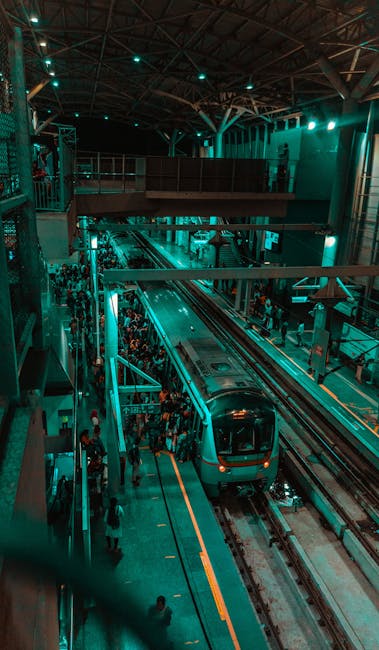
![Inside a London underground station platform at Becontree, with a moving train captured in motion blur along the tracks on the left side of the image. The platform is lined with evenly spaced wooden and metal columns, each supporting a section of the ceiling and featuring blue signs marked 'City Hall.' The surface of the platform is paved with dark tiles, and a yellow tactile strip runs parallel to the train for safety. Overhead, a large overhead sign indicates 'No Exit' and 'Exit at middle of platform.' The lighting is bright, illuminating the platform and creating reflections on the train’s metal exterior. The scene depicts an empty station platform, which is associated with house removals and moving logistics, emphasizing the importance of efficient transit for home relocation services provided by Man with Van Becontree at [PAGE_TITLE], supporting seamless furniture transport and packing during moving processes.](/pub/blogphoto/becontree-station-removals-doortoplatform-moves-explained2.jpg)
Common Mistakes to Avoid
Most problems in door-to-platform removals are predictable. That's the good news. The bad news is they're also common.
- Underestimating the size of the load - One "small" move can need a van, padding, and two extra hands.
- Leaving packing to the last minute - This usually creates damage, confusion, and missing items.
- Ignoring access restrictions - Station areas can be busy, controlled, or simply awkward to work in.
- Using poor lifting technique - Back strain and dropped items tend to happen when people rush.
- Not checking the weather - Rain makes cardboard weaker, surfaces slicker, and patience thinner.
- Trying to move specialist items without specialist support - Pianos, antiques, and oversized furniture deserve caution.
There's also a psychological mistake, if you can call it that: assuming the move will "sort itself out once we get there." It rarely does. A few minutes of planning usually beats twenty minutes of improvising. Every time.
If you want to understand the physical side of lifting, our article on kinetic lifting and safe movement covers the basic principles in plain language. No gym-bro nonsense, thankfully.
Tools, Resources and Recommendations
You do not need a warehouse full of gear, but the right basics make a huge difference. For most station-related removal work, a sensible kit includes:
- strong boxes in mixed sizes
- bubble wrap or paper padding for fragile items
- furniture blankets
- stretch wrap for drawers and loose parts
- trolley or sack truck
- ratchet straps or tie-downs
- tape, labels, and marker pens
- gloves with a solid grip
For packing supplies, our packing and boxes service in Becontree is a practical place to start if you need materials rather than guesswork. If the move includes temporary off-site holding, the storage in Becontree page is also useful for planning what to keep close and what to move later.
A small but underrated tip: keep a photo of the original item condition before the move. That way, if a scuff already exists, nobody has to debate whether it happened during transport. It's just sensible, really.
Law, Compliance, Standards, or Best Practice
For removals near stations and public areas in the UK, the main practical concern is safe working rather than a complicated legal maze. That said, good operators should work in line with normal health and safety expectations, use suitable manual handling methods, and take reasonable care around members of the public.
Best practice usually includes:
- careful manual handling and load assessment
- clear communication with the customer about access and timing
- proper vehicle loading and item securing
- attention to slip, trip, and fall risks
- respect for shared spaces, neighbours, and station users
If you are checking provider standards, it is sensible to review public-facing information on insurance and safety, along with the company's health and safety policy. For trust and account-handling reassurance, payment and security can help you understand what to expect before booking.
Also, a professional removals business should be clear about its terms, complaints route, and service limitations. If something is not covered, it should be explained. That transparency matters more than polished sales language. Always has.
Options, Methods, or Comparison Table
Not every move needs the same approach. The best method depends on the number of items, the distance, access, and how much help you want on the day.
| Method | Best for | Strengths | Limitations |
|---|---|---|---|
| Door-to-platform transfer | Station-area handovers, small to medium loads, tight timing | Efficient, controlled, useful where access is limited | Needs clear planning and good timing |
| Man and van move | Single items, part loads, short local relocations | Flexible, often cost-effective, easy to scale | May not suit very large or specialist items |
| Full house removal | Whole-property moves with multiple rooms | More comprehensive, better for larger households | More planning and more time required |
| Storage-first move | Delayed completion, downsizing, temporary moves | Gives breathing room and reduces pressure | Requires careful inventory and a second transport stage |
For larger properties, house removals in Becontree may be the better fit. For smaller homes or tight stairwells, furniture removals in Becontree can be more practical. It all depends on the shape of the job, not just the headline distance.
Case Study or Real-World Example
Here's a realistic example. A tenant in a Becontree flat needed to move a bed frame, mattress, a small desk, and six boxes into storage before a new tenancy began. The property had a narrow stairwell, the road outside was busy, and access at the storage end was limited to a short loading window.
The solution was simple but well planned:
- the bed was dismantled the night before
- the mattress was wrapped and kept dry
- boxes were sorted into "first needed" and "not needed yet"
- the route out of the flat was cleared in advance
- the van was loaded so the storage items could come off first
The biggest win was not speed alone. It was calm. Nothing got left behind, nothing got wet, and the move was done without the usual frantic back-and-forth. A very ordinary job, really, but it went well because the steps were handled properly.
If your move includes larger bedroom furniture, the guide on moving your bed and mattress efficiently is a good companion piece. It covers the sort of practical details that save you from a very awkward corner turn.
Practical Checklist
Use this checklist a day or two before the move. It helps more than people expect.
- Confirm the exact door-to-platform meeting point
- Check access, parking, and any time restrictions
- Measure large or awkward items
- Pack fragile items separately
- Label boxes clearly
- Wrap furniture corners and edges
- Keep tools, keys, and documents together
- Clear hallways and loading areas
- Arrange storage if needed
- Photograph valuable items before transport
- Confirm contact details for everyone involved
- Set aside essentials for the first 24 hours
If the move is time-sensitive, you may also want to look at same day removals in Becontree. That can be especially helpful when a tenancy handover or delivery slot is fixed and there's no room for drift.
Conclusion
Door-to-platform removals near Becontree Station are all about reducing friction. The less you leave to chance, the smoother the move tends to be. That means planning the route, protecting the items, using the right equipment, and keeping timing realistic. It's not glamorous work, but it is the sort of work that feels much better when it's done properly.
Whether you're moving a few pieces of furniture, handling student belongings, or managing a more delicate transfer with storage in the mix, the main goal is the same: keep the process safe, efficient, and controlled. If you take one thing from this guide, let it be this - the best removals are usually the quiet ones. Not effortless. Just well prepared.
Get a free quote today and see how much you can save.